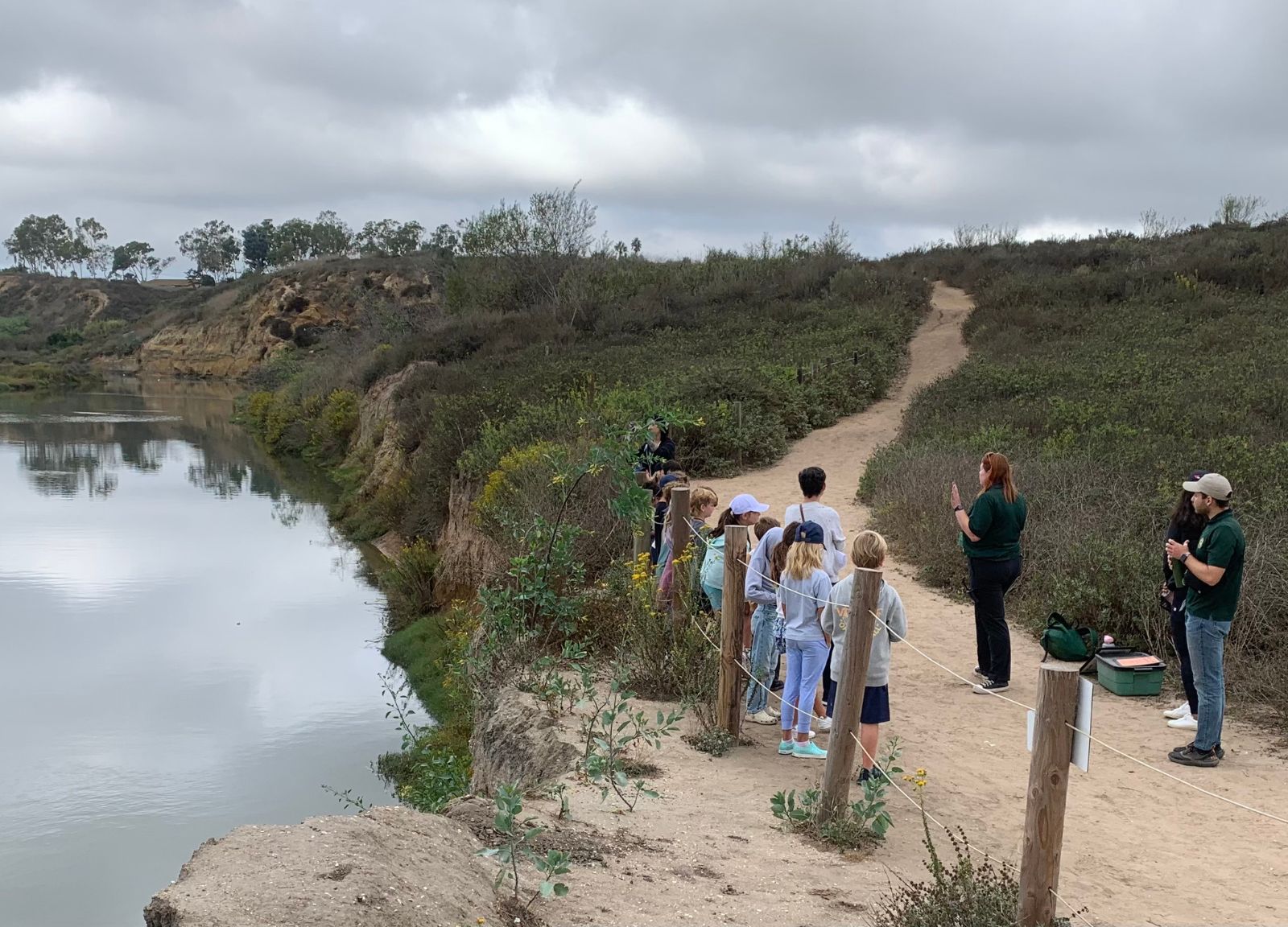
 Welcome to Inside the Outdoors' Wild Wetlands program at the Muth Interpretive Center!
Second Grade
NGSS PE Supported: 2-LS4-1
During this field trip to Upper Newport Bay, second-grade students explore one of Orange County’s last remaining wetlands, a unique habitat that supports many plants, animals, and birds. During their visit, young scientists observe and classify water and land birds, noting seasonal trends in their populations; look for patterns in physical features of plants; and investigate how wetlands provide both seen and unseen resources for local and migrating birds while exploring how urbanization has reduced the availability of these habitats. Through these investigations, they develop an understanding of the interdependence of life in wetlands and why protecting places like Upper Newport Bay is essential.
Activity Stations include:
- Bird Investigation: During this investigation, students use binoculars and field guides to identify different types of birds that are present during their field trip to Upper Newport Bay. As students take a hike to identify birds, they classify them as water birds or land birds. They then compare their findings with a graph showing how the abundance of these birds change by season.
- Wetlands and Migration Investigation: In this investigation, students build a model of a wetland to explore the seen and unseen resources it provides for birds and other animals. Using the model as a foundation, they then participate in a short game to further explore the importance of wetlands for migrating birds throughout the year. During the game, they explore how urbanization has caused a decline in the available wetland habitats and affected wildlife, particularly birds. Students then reflect on the importance of protecting places like Upper Newport Bay.
- Plant Investigation: In this investigation, students make observations of plants found at Upper Newport Bay and describe the types of plants that thrive in a wetland and coastal sage scrub habitat. Using field guides, students draw and label the plants they observe, describing the physical features such as leaves, stems, and flowers.
View the Resources pages for pre/post information. 
Site Details:
Location: Muth Interpretive Center - Click
here for a map to the site. The address is on the map.
Time: 9:00 - 11:00 am. or 11:30 am - 1:30 pm, Lunch area is available at Mariner's Park off Irvine Blvd.
Parking: No fee, space can be limited at times
Accessibility: partially wheelchair accessible
Visit OC Parks
website for the Muth Interpretive Center.


