
This week's theme is Animal Ambassadors! Below are the activities for the week. You can do these activities at your own pace.
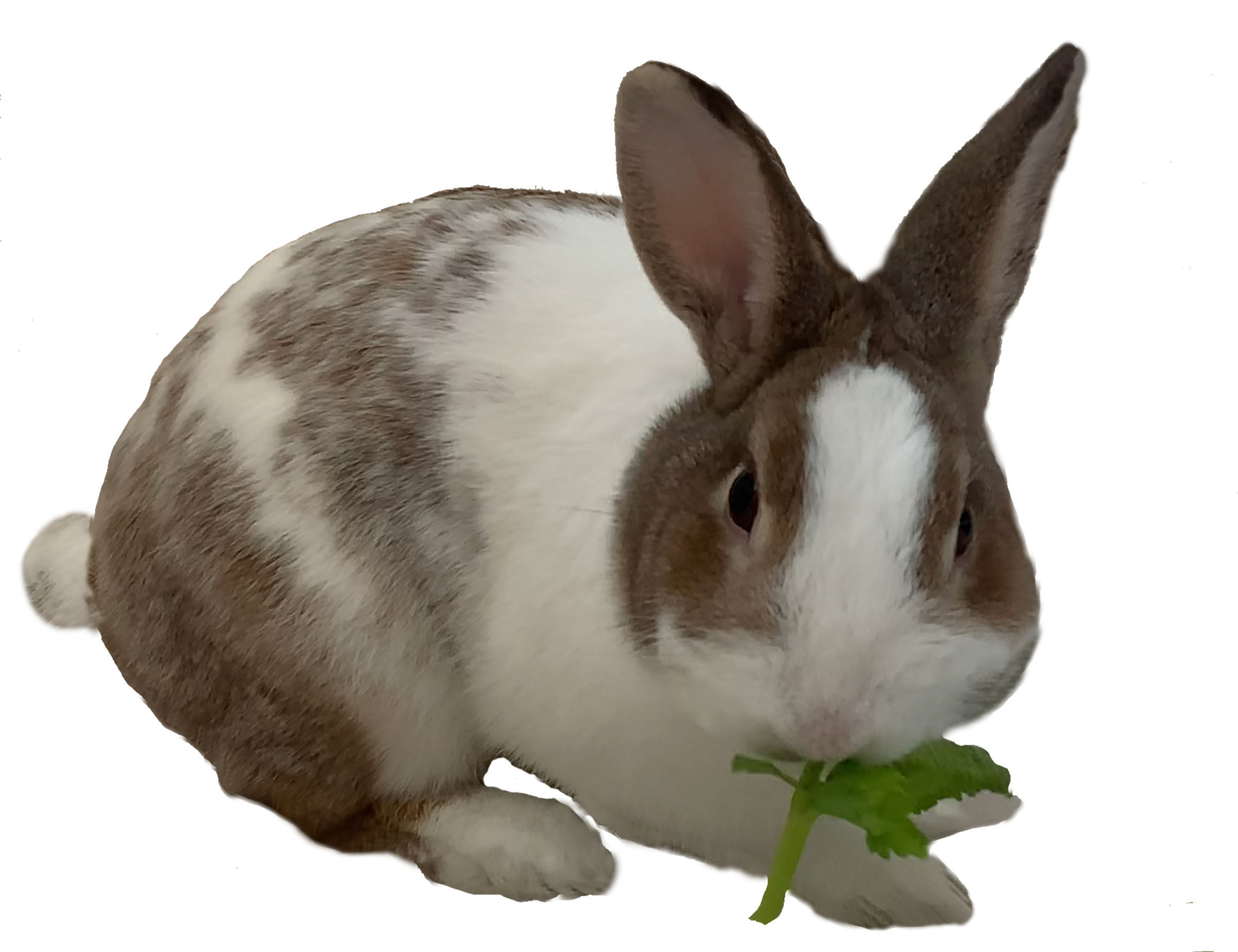
Our Animal Ambassador this week is Cinnabun the Rabbit. If you haven't received your packet, you can download Cinnabun here.
For details each day, click on the day of the week below. You can also download a PDF of the week's activities. If you are looking for more information or details about the animal groups or some of the scientific terms used during camp, see the Additional Resources section below.
Monday - Birds
Tuesday - Mammals
Wednesday - Reptiles
Thursday - Amphibians
Friday - Arthropods
INTRODUCTION
Meet Animal Ambassadors of the world and find out how they can teach us about their wild counterparts. Campers will learn about mammals, reptiles, amphibians, birds, arthropods and how their body parts help them survive and adapt in different places around the world.
KINDNESS THEME OF THE WEEK
This week our kindness activities will be focused on kindness to animals. Record your kindness activities in your Nature Journal and log them into OCDE's One Billion Acts of Kindness page.
Google Drive - Videos from Check-in Calls (recorded without campers)
NSI Backyard Missions - This page has all the missions, including versions in different languages.
Monday - Birds
Nature Journal Topic
Observe, Wonder and Learn; Look in your backyard, during a walk with family or through a window- do you see anything a bird might use to survive such as food, water or shelter? In your Nature Journal try to list or draw as many items as you can and describe the ways a bird can use them to live. You can print an OWL worksheet for your journal if you prefer.
Kindness Activity
- Migrating birds use light to help them find out which direction to go on their journey. Turn off all lights (even small night lights) before bed to help prevent birds from flying into windows and doors.
- Take care of your own pets without being asked to.
Get Moving!
Every year, hundreds of thousands of birds migrate in search of warmer climates, food and long sunny days. They must overcome many challenges, so in a safe open area, arrange obstacles- such as furniture, pillows, toys or play equipment- that you must navigate through to land safely on the other side. Don't forget to flap your wings like a crow or soar like a hawk!
Craft/Experiment - Build a Nest
Materials:
- Timer
- Household items, be creative!
- Your mission is to gather as much as you can carry in one hand to successfully make a nest. Gather anything you think would make it comfortable, it can be tiny for a hummingbird or big enough for you!
- Set your timer for 30 seconds. After completing your nest decide if you were successful or if there are any changes you would like to make. Repeat for as many rounds as you like!
Family Activity
- Download the app iNaturalist or Seek and be Citizen Scientists by taking photos of living things-especially birds- you see in the habitats around your neighborhood. There are many other Citizen Science projects that your family can be a part of as well. Here are some suggestions from our website.
- Have time for a movie? Ask the whole family to join in watching films like Disney's “Water Birds" or “The Rescuers Down Under."
Tuesday - Mammals
Nature Journal Topic
Mammals come in all shapes and sizes, but we often see mammals like dogs and cats as pets. If you could have one huge mammal as a pet, what would you pick? Draw your animal. How would you take care of it? What would it need to live happy and healthy? Would it be difficult or easy and why? Some examples of huge mammals are hippos, polar bears, giraffes, zebras and gorillas!
Kindness Activity
Practice taking care of a furry friend by using one of your favorite toys. If you already have a furry pet at home, show them some extra love today with gentle pets or a big belly rub.
Get Moving!
What's that smell? Mammals like bears, rats and dogs have a great sense of smell, put your nose to the test around your house or outside and try to identify as many smells as possible. If you want to make it trickier, close your eyes.
Craft/Experiment - Poster
Make a poster all about what makes a mammal a mammal.
Materials:
- Large piece of paper
- Crayons/colored pencils/markers
- Access to the internet/library if needed
Be creative as you like as you design your poster. Try to include these four important facts:
- Mammals are warm blooded, their temperature in their bodies stays the same.
- Mammals give live birth.
- Mammals have fur to keep them warm.
- Mammal babies drink milk, just like us!
Craft/Experiment – Mammal Mask
Materials:
- Paper plate or 8x12" piece of paper
- Scissors
- String or yarn
- Crayons/colored pencils/markers
- Choose your favorite mammal for inspiration, then begin making your mask by decorating your plate/paper with different colors. Does your animal have stripes? Spots? Zig zag patterns? Super fluffy fur or short spiky hairs?
- Cut out two eye holes so you can see through your mask, to help guide you on where to cut, hold the paper or plate up to your face and have a family member mark where your eyes roughly touch the mask.
- Poke one hole on the left and right side of your mask.
- Thread your string/yarn through one hole and tie a knot so it does not come undone. Thread your same string through the second hold and tie another knot. Make sure to use enough string that it can fit around your head comfortably.
Family Activity
- All humans are mammals, so we share a lot in common with each other. But you've probably noticed not all of us look or act exactly the same. Everyone in your family today can take turns making observations about each other by pointing out the similarities and differences from one another, such as hair color, eye color or height.
- Have time for a movie? Ask the whole family to join in watching films like Disney's “Zootopia" or “Chimpanzee."
Wednesday - Reptiles
Nature Journal Topic
In your nature journal draw one reptile you have learned about at school or have seen before. Label their body parts, and try to answer these questions on your paper:
- Does your reptile have fur or scales?
- Where do you think it likes to live?
- Does it like to walk on land or swim in water?
- What does your reptile like to eat?
Make an extra effort today to pick up any litter you find on the ground and throw it in a trash can. (Use gloves or a “trash grabber" to protect yourself from sharp items and germs). Many animals including reptiles might mistake trash as food and accidentally eat the trash which may harm them.
Get Moving
Tortoise shell hopscotch. Grab a piece of chalk and draw your best tortoise shell design on the ground, number each section and make your way to the other side!
Craft/Experiment - Lizard in the Sun
Materials:
- Black or dark blue construction paper
- Scissors
- A sunny spot or lamp
- Optional recommendations: two small to medium sized Tupperware containers, sand or soil
- Begin by cutting out two lizard shapes from your construction paper. You can trace an outline from the internet or draw your own!
- Place one lizard in your sunny spot or under the lamp. If you are using containers and sand or soil, put an even layer of sand or soil in your container then place the lizard on top.
- Put your second lizard somewhere shady and cool. If you are using a container and sand/soil, repeat the step of filling it up and putting your lizard on top. Put the container in a shady and cool spot.
- Let your lizards sit for 15 minutes. Go to your lizard in the sunny spot first and touch the paper with the back of your hand. Is it warm? Still cool? Touch your sand/soil as well and notice if you feel a temperature change.
- Go to your lizard in the shaded spot and touch it with the back of your hand. Do you notice any temperature changes? What about any change in your sand/soil?
- Now it's time to make some changes. Try to change one thing in the sunny spot and the shady spot. Here are some ideas: bury your lizard in the sand/soil, put your lizard farther away from the sunny spot, create shade for the sunny spot, add an object that your lizard could use as a shelter.
- After making your changes, leave your lizards in their spot for 15 minutes, then observe any temperature changes.
Family Activity
Go outside as a family and try to find as many pieces of animal evidence as you can. Remember to use some of your senses; seeing, listening, smelling and touching. If you're not sure a plant or soil is safe to touch, use your eyes to observe instead. Share your findings together.
Thursday - Amphibians
Nature Journal Topic
How could you and your community make a more frog friendly habitat? Draw some of your ideas or list them in your Nature Journal. Is there already a good environment for frogs where you live? A few facts to help your thinking; frogs need clean water, places to hide, can breathe through their skin and are insectivores.
Kindness Activity
- The water you save now remains a clean habitat for wild amphibians without being treated. Do remember to turn off the sink while brushing your teeth and try to take shorter showers. If you drop an ice cube on the floor instead of throwing it away, see if you can place it in a potted plant.
- Offer to clean up after your pet (pick up droppings, clean litter box).
Get Moving!
Frog Olympics: Just like humans, frogs have big muscles in their legs, but theirs allow them to jump as much as ten times their body length. If a human is 6ft tall, that is like jumping 60ft! Try to jump as far as you can three times and mark your landing spots.
Craft/Experiment- Fast Like a Salamander
Materials:
- Stop watch or phone with a timer
- 3+ small household items
- Paper and pencil
- Tape/string optional
- The web-toed salamander in California has the fastest tongue on Earth, meaning they can grab and swallow their dinner faster than a human can blink! Today's experiment will test what changes we can make as humans to catch our 'prey' as quickly as possible just like a web-toed salamander.
- First, find three small items in your house that are about the same size and can fit into one of your hands easily.
- Place them side by side on a table, couch, chair or the floor.
- Take five to ten steps back and if you can, mark your spot with a piece of tape, string or anything on the ground so you can remember where you started.
- Using your timer or stopwatch, you will test how long it takes for you to quickly grab one item and come back to your starting point. You will repeat these actions two more times for a total of three tests. Write your data on your paper and compare the results. Were you faster or slower on your second and third tests? Did you drop any of your items on your way back? What could you do differently next time?
- Repeat the experiment, line up your three items or find three new ones and try to change one thing about your experiment. Do you want to take bigger steps? Do you want to use items that are softer and easier to hold? Compare these tests with your first ones.
Family Activity
Go outside as a family and try to find as many pieces of animal evidence as you can. Remember to use some of your senses; seeing, listening, smelling and touching. If you're not sure a plant or soil is safe to touch, use your eyes to observe instead. Share your findings together.
Friday - Arthropods
Nature Journal Topic
Step outside or look through a window and try to spot one insect and take a moment to observe its shape, size, color and behavior. Then, in your Nature Journal, begin drawing the insect the best you can, and write down some notes; where did you see the insect? What do you think it is called? What colors did it have?
Kindness Activity
Many bugs rely on fallen leaves for food and undisturbed soil to raise their young. The next time you and a family member goes outside, try to do at least one of these things to be more bug friendly; don't kick leaves, don't stomp on the soil and don't move/pick up sticks or rocks they might use for homes.
Get Moving!
Humans have a head, shoulders, knees and toes, but an arthropod has a head, thorax and abdomen. They also have compound eyes, some have antennas too, some have wings but not all do. Make up a dance to your favorite song to mimic the parts of an arthropod. You can put your hands on your tummy to show “abdomen" or give yourself a big hug to show “thorax". Maybe wiggle your arms to show your wings!
Craft/Experiment - Bag of Arthropods
Materials:
- Paper- any kind, even newspaper
- Scissors
- Sandwich or grocery bag
- Glue or glue stick
- Crayons or colored pencil or markers
- Optional: googly eyes/stickers
- Start by cutting out circles, triangles, rectangles and half circles from your paper. Try to make them different sizes as well. Try to cut 10-15 shapes.
- Next, place all of the shapes in a bag and shake them all up.
- Without peeking, pick one shape at a time and begin building your arthropod. Use your glue to stick the papers together. Are you making a crawling caterpillar? A cranky crab? A silly shrimp? You can even create your own new species!
Decorate and share your creations.
Craft/Experiment - Bug Hotel
Materials:
- Container- a shoe box, empty cookie tin, empty milk jug, wood box or an old flower pot-
- A few sheets of plain paper or newspaper
- Scissors
- String
- Optional: twigs, leaves, pebbles, toilet paper tubes, pine cone
- Choose your hotel frame and decide how you want to place it. Do you want it standing up and you fill it from the bottom to top? Or will it lay on its side and you have one even layer across the entire container?
- Begin by cutting your pieces of paper into strips, about four inches wide and five inches long. Roll it into a tube shape and tie a piece of string around it so it does not unfold.
- Depending on how you orient your hotel, begin stacking your tubes heaviest at the bottom and lightest on the top*. If you are doing one even layer of tubes with none lying on top of each other, try to leave enough space between so that insects can crawl in and out easily. *Heavy items such as pebbles can be placed inside the tubes at the bottom, medium items such as pinecones or twigs can be placed in the middle, then finally light items like empty tubes can be at the top.
After your frame is full, your bug hotel is complete and ready for check in! If you choose to set your hotel outside, you might find critters like beetles, crickets and spiders checking in to rest and cool off from the hot summer day.
Family Activity
Sometimes our insect friends get a little lost and end up inside our homes. Instead of squishing them, take turns with family members as designated bug rescuers to carefully move them back outdoors or out a window. Work as a team if a family member needs help. And remember, insects do not enter our homes to hurt us they just need a little help finding their way back to nature
Have time for a movie? Ask the whole family to join in watching films like Disney's “A Bug's Life."
Glossary
| Vocabulary word | Definition |
| Amphibian | A cold-blooded, scaleless animal that has a backbone. It usually begins life in the water, breathing with gills. It later develops lungs and can live both on land and in water. Some examples of amphibians are frogs, toads, salamanders, and newts. |
| Arthropod | An invertebrate animal with an exoskeleton, jointed legs, and segmented body. Some examples of arthropods are insects, spiders, millipedes, and crabs. |
| Bird | A warm-blooded, two-legged, egg-laying animal. It has a backbone, wings, and a body covered with feathers. Some examples of birds are hawks, sparrows, doves, and eagles. |
| Ecosystem | All the living and nonliving things that interact in a particular area. |
| Endothermic (“Warm-Blooded") Animals | An animal that maintains a constant internal body temperature, regardless of the external conditions. |
| Exothermic (“Cold-Blooded") Animals | An animal that cannot regulate its own body temperature, so its body temperature changes with the environment's temperature. |
| Habitat | The place where a plant or animal lives that has food, water, shelter, and space. |
| Mammal | A warm-blooded animal that has hair and a backbone; the young feed on mother's milk. Some examples of mammals are rabbits, bears, deer, bobcats, and humans. |
Metamorphosis | (In an insect or amphibian) the process of transformation from an immature form to an adult form in two or more distinct stages. |
Reptile
| A cold-blooded animal that has a backbone and a body covered with scales or horny plates. Some examples of reptiles are lizards, snakes, turtles and tortoises. |
Videos
These additional videos can help further your learning about Amazing Animals!


