
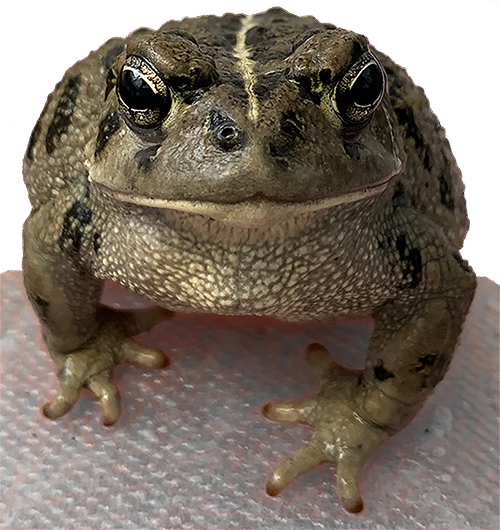
This week's theme is Save the Earth! Below are the activities for the week. You can do these activities at your own pace.
Our Animal Ambassador this week is a Western Toad. You can download the Western Toad here.
For details each day, click on the day of the week below. You can also
download a PDF of the week's activities. If you are looking for more information or details about the animal groups or some of the scientific terms used during camp, see the
Additional Resources section.
Monday - Pollution
Tuesday - Native Habitats
Wednesday - Endangered Species
Thursday - Rethink Trash
Friday - Reduce Your Footprint
Kindness to Animals is our kindness topic for the week. Each day we challenge you to do something kind for an animal.
Download ideas here or come up with your own!
Google Drive - Videos from Check-in Calls (recorded without campers)
NSI Backyard Missions - This page has all the missions, including versions in different languages.
Additional Resources
Monday - Pollution
Nature Journal Topics and Kindness
Draw a picture of your favorite place in nature and write about what you can do to help keep it clean and protected. Why is this your favorite place? What are examples of pollution? How do you help our pollution problem? Pick a way you will be kind to the Earth today. You can use the
list provided or come up with your own! Write or draw what you did in your Nature Journal.
Get Moving
Walk or ride your bike! This is a great way to get from one place to another and get some exercise without using a car. This helps cut back on pollution and conserve natural resources.
Craft/Experiment
Oil Spill Experiment
Materials:
- At least four items to represent plants and animals (leaves, stick, feather, cardboard, plastic lid, pipe cleaner, or other craft supplies that can get messy or ruined)
- Small bowl
- Water
- One tablespoons of oil
- Soap
- Spoon
- Paper towel or paper napkin
Instructions:
- Fill a bowl with water. Is it a lake? An ocean? Use your imagination!
- Add one tablespoon of oil to the water. This would be like an oil spill.
- Place your items in the oil. Do “plants” and “animals” in the water end up getting dirty when oil spills happen?
- After two minutes, remove the item and try to clean it with clean water. If the animals and plants try to clean up in water, are they truly clean?
- Now, try cleaning the items with both soap and water. Write down your observations. Does the item feel cleaner now? Can animals in nature clean themselves with soap and water, or do they need help from humans?
- Next, try to clean up the oil in the water. First, use a paper towel or napkin to absorb the oil in the water. Does this work very well? Is there still oil in the water? Write down your observations in your Nature Journal.
- Try getting the oil out of the water using a spoon. Report your observations again.
- Can you come up with other ideas for cleaning up the water? How can we clean up the water when oil spills happen in real life? What will happen to the animals and plants in the water if we can’t clean up the oil?
- When you are done with your experiment, clean up your oil spill and properly dispose of your items if necessary.
Family Engagement Activity
A great way to help keep pollution out of the environment is to throw your trash in the proper place. A family trash assessment or the waste reduction challenge is a great place to start reducing pollution. At Inside the Outdoors, we like to call this trash talking Garbology: the study of garbage.
Family Waste Reduction Challenge
Family Trash Assessment
Tuesday - Native Habitats
Nature Journal Topics and Kindness
What types of plants and animals are native to habitats in your area? What conditions are in your native habitats (what’s the temperature like, how much rain do you get, when does it rain)? You can look up past weather data in the
almanac. Pick your kindness activity for the day and note it in your Nature Journal.
Get Moving
Let’s see where in your house you can find water! You can take a survey of the water in your house in your Nature Journal or using this
Home Water Survey.
Craft/Experiment
Create a Plant
Materials:
- Paper/Cardboard
- Pen/Pencil
- Legos, building blocks, Play-Doh or clay, if you would like
- Rocks and sticks, if you have them
- Crayons/Markers/Paint (optional)
Instructions:
- Using material you have in your house, you are going to create your own plant.
- Think about the different parts of the plant that you would like to have.
- Also, think about what habitat your plant would live in. Is it hot or cold?
- How much water does your plant need to survive?
Family Engagement Activity
Calculate your families
Water Footprint. A water footprint is an estimate of how much water it takes to run the appliances in your house, grow your food, for your clothes and everything else that is a part of everyday life. How small is your family’s water footprint? Is there anything your can do to make your footprint smaller?
Wednesday - Endangered Species
Nature Journal Topics and Kindness
Make a list or draw some endangered species. A few examples are sea otters, California Condor, California tiger salamander, and grey wolf. What are some ways we can all help endangered species? If you want some more suggestions for endangered species, you can use one of the following articles or check out the video resources at the end of this document. How are you going to be kind to the Earth today? Don’t forget to add to your Natural Journal and log on the billion acts of kindness website.
Get Moving
Endangered species race. How many different endangered species can you race like? Challenge a family member or time yourself and try to beat your times.
Craft/Experiment
Egg Carton Sea Turtle
Materials:
- Egg carton
- Construction paper/color paper/white paper
- Markers or paint
- Glue
- Googly eyes (optional)
Instructions:
- Cut out an individual “shell” from an egg carton.
- Color the “shell” green or other color.
- Cut four flippers and a small tail from green construction paper, or white paper that you have colored green.
- Glue the flippers and tail to the “shell.”
- Use crayons or markers to add eyes to your turtle and don’t forget to give it a name!
Family Engagement Activity
Watch a movie or short YouTube show with endangered species such as Rio, The Lorax, Born in China, or Chimpanzee. Discuss with family some of the reasons why animals and plants are endangered.
YouTube Videos:
Thursday - Rethink Trash
Nature Journal Topics and Kindness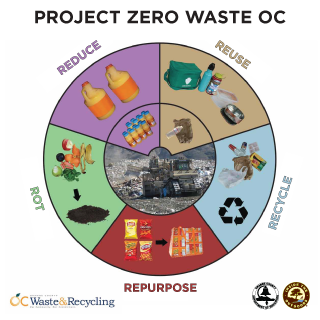
Look at your trash from one or two of your meals today. Which pieces of trash could be Reduced, Reused, Repurposed, considered Rot, or Recycled? What items would go to the landfill? Record your answers in your Nature Journal. Write in your journal how you are going to be kind to the Earth today.
Get Moving
Learn your recycling numbers! All items that can be recycled have a triangle with a number in it. The numbers tell you how easy it is to recycle that item. You can learn the codes
here. The greater the number, the harder it is to recycle. Take a look at your recycling bins and sort the items by their number. Do you have more of one than others? Do you have a lot that are harder to recycle? If you don’t have much recycling, you can look at some of the items in your pantry or refrigerator.
Craft/Experiment
Recycled “Trash” Art Project
Materials:
- Items from your recycling bin (paper, cardboard, plastic, etc.)
- Construction paper, scissors, glue, colored pencils, markers, or crayons
Instructions:
- Go through your recycling bin and collect items such as paper, cardboard, and plastic that you can use for your art project. You can use whatever you want!
- Once you have collected the rest of your materials, brainstorm what kind of art project you want to create. You might want to create a flower, animal, or a sign for a family member.
- Get creative and use all of your recycled materials to create your masterpiece!
- Give it a name and find a place at home to display your art.
Junk Mail/Magazine Mosaics
Materials:
- Junk mail and/or old magazines
- Piece of paper or cardboard
Instructions:
Use colorful junk mail and old magazines to cut different, small shapes (about the size of a nickel). Sort your shapes by color and then glue the shapes onto a piece of construction paper to create a picture or design.
Here is a short video on
Easy Mosaic Art. You can substitute the paper with repurposed junk mail and magazines.
Family Engagement Activity
Play the 5 R’s Scattergories. Each player needs one piece of paper folded long ways to make five columns. Write the 5 R’s at the top (one on each column). Pick an “R” to start with and set a timer for 60 seconds and each player writes down as many ways to do that “R”. Then take turns sharing your answers and you get one point for each answer the other players agree with. Play four more rounds with the other “R’s”. Whoever gets the most point wins!
Friday - Reduce Your Footprint
Nature Journal Topics and Kindness
How can you reduce the number of resources that you use? Write in your journal some ways you can reduce the amount of paper products, water, gas or other natural resources that your family uses. Also, how are you going to be kind to the Earth today?
Get Moving
Go on a Natural Resources Scavenger Hunt in your house or yard. See how many different items you can find that use natural resource. You can
download the scavenger hunt or write your answers in your Nature Journal.
Craft/Experiment
Reduce Your Footprint Poster
Materials:
- Construction paper/color paper/white paper/recycled paper
- Markers or paint
- Scissors
Instructions:
- Select your paper for your poster. Make sure it isn’t too big or too small to hang somewhere in your house.
- Pick five ways you would like to help reduce your eco-footprint. You could focus on any or all of the different natural resources we have discussed this week.
- If you would like, trace a foot to use to decorate your poster.
- Write your five ways you would like to reduce your footprint. If you come up with less, that is okay too. You can always add more later.
- Hang your poster up where you can see it and remember your commitment.
Family Engagement Activity
Share with your family the natural resources you found the scavenger hunt. Discuss how you could use less of some of these resources. Challenge your family to pick an Earth saving commitment or cause to support.
Additional Resources
Glossary
| Vocabulary Word | Definition |
| Household Hazardous Waste | Waste which can harm people, other living organisms, and the ecosystem and should be separated from household trash |
| Native | Existing or growing naturally in a region or country |
| Non-native | Existing or growing in a region or country that is not the area the occur naturally |
| Recycle | The process of changing waste into new materials, products and packaging |
| Reduce | To decrease the amount of waste produced |
| Reuse | Using product or material again and again, instead of throwing away or recycling |
| Repurpose | The practice of converting waste into items without having to break down the original materials, this is sometimes called upcycling |
| Rot | Slowly decomposing to create a soil like material, such as compost |
Videos
These additional videos can help further your learning:
Helpful Websites


